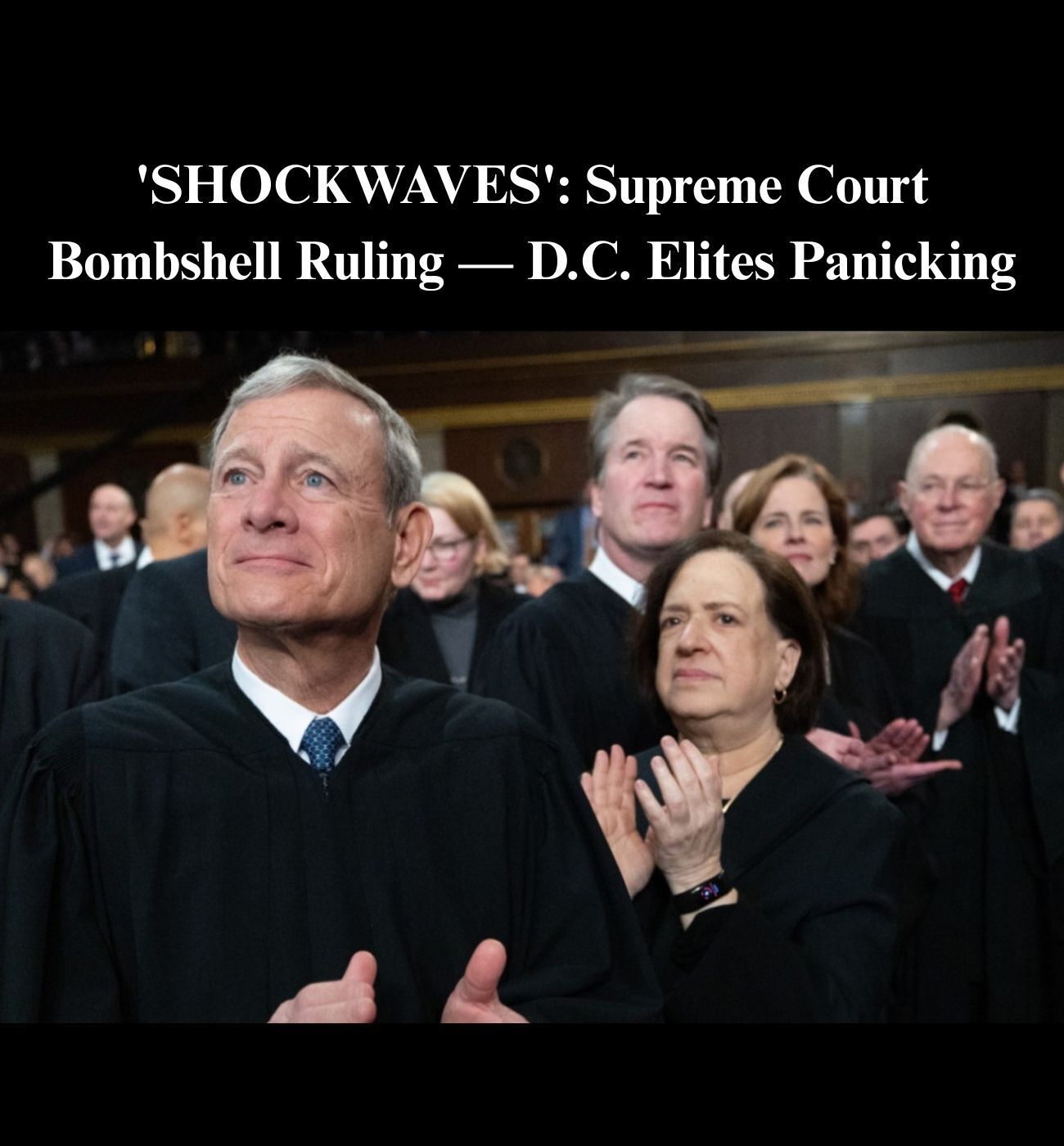
The Supreme Court on Monday erased a lower court ruling that had upheld New York’s strict school vaccine rules that don’t allow for religious exemptions and ordered judges to reconsider the case with a new focus on parental rights.
Amish parents had challenged the law, arguing New York once recognized religious exemptions but eliminated them in 2019, The Washington Times reported.
A federal district court and then the 2nd U.S. Circuit Court of Appeals ruled against the families.
The Supreme Court told the appeals court to reevaluate the case in light of last term’s ruling involving the lack of parental opt-outs from the LGBTQ diversity curriculum in Montgomery County, Maryland.
The justices vacated the 2nd Circuit opinion, removing it from effect.
Kelly Shackelford, president of First Liberty, which represented the Amish families, called the order a victory.
“The Amish community in New York wants to be left alone to live out their faith just like they have for 200 years,” he said. “The Amish take their faith very seriously and are simply asking the State of New York to respect their sincerely held beliefs.”
The justices had recently declined to hear another vaccine-related challenge from California, where a mother sought recognition of her Christianity-based objections to immunizations.
California, like New York, allows medical exemptions but ended religious and personal belief exemptions in 2016.
The 2nd Circuit had previously ruled New York’s rules were neutral on their face and showed no evidence of anti-religious bias.
The Supreme Court did not explain which part of the 2nd Circuit’s decision conflicted with last term’s parental-rights ruling.
That decision, Mahmoud v. Taylor, found the government cannot make access to public education conditional on parents abandoning their religious beliefs.
“Public education is a public benefit, and the government cannot ’condition’ its ’availability’ on parents’ willingness to accept a burden on their religious exercise,” Justice Samuel A. Alito Jr. wrote for the 6-3 majority.
The Supreme Court appeared poised this week to deliver one of the most consequential rulings on executive power in nearly a century, signaling it may overturn a 1935 decision that created the modern “independent agency” structure and limited the president’s authority to remove top federal officials.
During oral arguments Monday in Trump v. Slaughter, several justices suggested that the long-standing precedent set by Humphrey’s Executor v. United States — which allows leaders of agencies like the Federal Trade Commission and Securities and Exchange Commission to operate beyond direct presidential control — may be unconstitutional.
The case originated from a challenge to President Donald Trump’s decision to remove a member of the Federal Trade Commission without cause.
If the Court sides with Trump, it could mark the end of what legal conservatives have long called the “fourth branch of government” — a network of powerful regulatory agencies largely insulated from voter accountability.
Justice Neil Gorsuch, one of the Court’s most vocal critics of administrative overreach, questioned whether Humphrey’s Executor ever aligned with the Constitution’s design.
“Maybe it’s a recognition that Humphrey’s Executor was poorly reasoned and that there is no such thing in our constitutional order as a fourth branch of government,” Gorsuch said.
The statement underscored a growing consensus among the Court’s conservative justices that the precedent conflicts with Article II of the Constitution, which vests “all executive power” in the president.
For decades, Congress has used the 1935 ruling to shield the heads of agencies from removal, effectively granting them independence from the executive branch.
Senator Eric Schmitt (R-MO), who filed an amicus brief in support of Trump, argued that Humphrey’s Executor “destroys democratic accountability by creating agencies the President cannot control.”
Legal scholars have described the decision as a cornerstone of the administrative state, one that allowed Congress to construct agencies that blend legislative, judicial, and executive powers.
But modern doctrine has largely abandoned the “quasi-legislative” and “quasi-judicial” labels used to justify the arrangement.