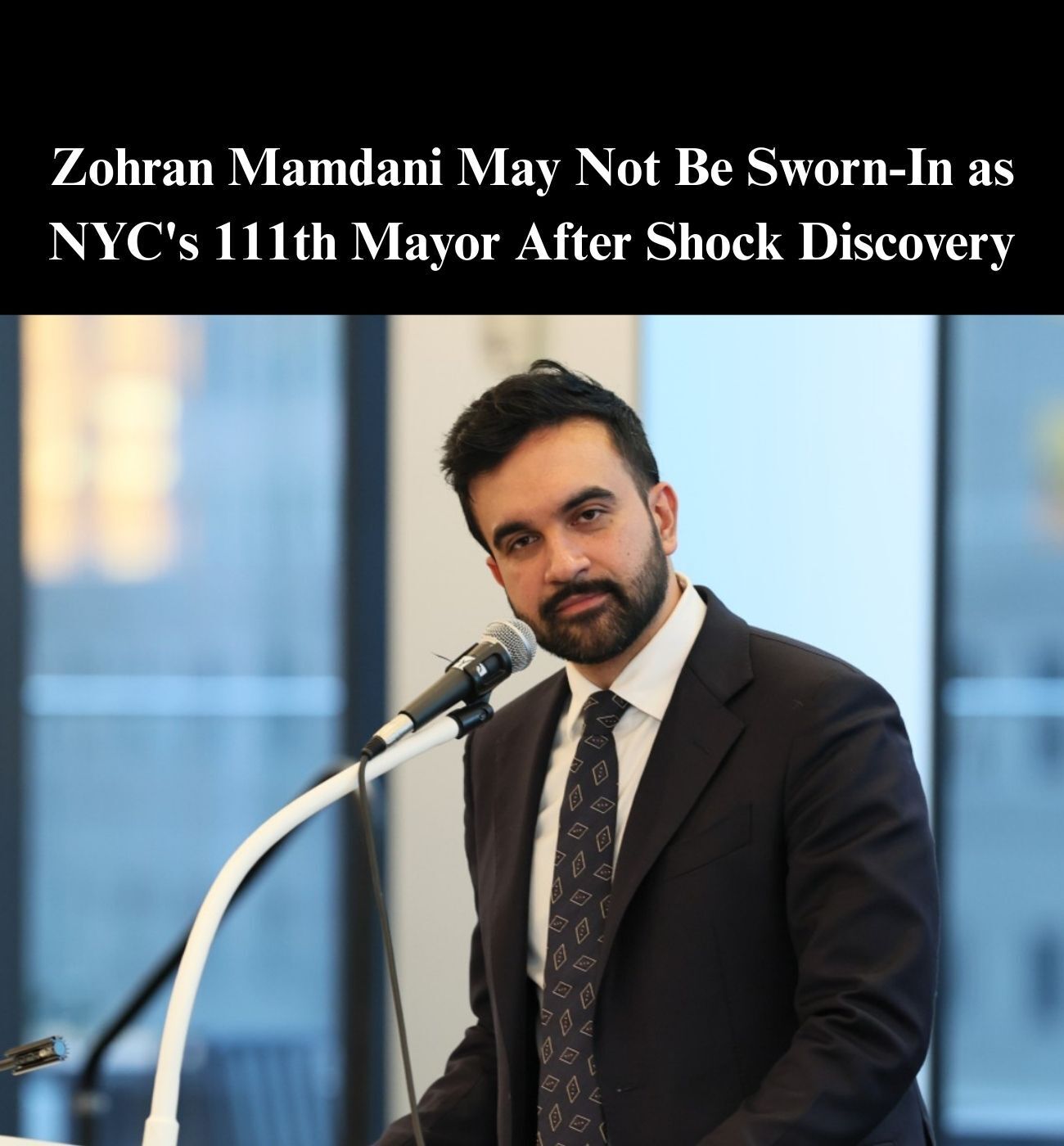
Self-described Democratic socialist Zohran Mamdani will make history on January 1, 2026, as the first Muslim mayor of New York City and one of the youngest mayors the city’s had in over a hundred years. But a historian now says that Mamdani may not even be the 111th mayor.
Mamdani won the election with 50.78% of the vote, beating Republican Curtis Sliwa and independent Andrew Cuomo. The election was closely watched in November.
The race got the most participants since 1993 and got a lot of attention across the country, in part because people like President Donald Trump criticized it.
At the age of 34, Mamdani is the city’s youngest mayor since the 1800s, and he is now a well-known member of the progressive left. The move from being a State Assembly member to the mayor of the city was mostly due to his grassroots work in Queens and his appeal to young voters.
But Paul Hortenstine, a historian, says that the number in Mamdani’s title is wrong.
“I would hope that the city takes the history of mayors very seriously,” Hortenstine said.
While looking into early mayors’ ties to the slave trade, he says he found proof that a mayoral term in the 1670s was wrongly not included in the official record.
Hortenstine told The Gothamist that he found records showing that Matthias Nicolls served a second term in 1675, but it was not consecutive. A piece of information the city forgot to write down.
Since then, officials have said that they knew about the research. Ken Cobb from the city’s Department of Records said the difference was surprising but worth looking into.
Hortenstine and historian Peter R. Christoph say that the mistake seems to go back to a city guide from 1841 that left out Nicolls’ second term.
“This was in 1675. So then, when I later looked through the official list of the city, I noticed that they had missed this term,” Hortenstine said.
Every record after that one made the same mistake.
Removing one term, like with US presidents, shifts the whole sequence that comes after because nonconsecutive terms count separately.
If the finding is formally accepted, Mamdani would be recorded as the 112th mayor instead of the 111th.
Mamdani’s power and move to the new job are not affected by the issue, but rather the historical numbers that go with his office. If the city changes the record, the materials for the inauguration and future records will just need to be updated.
In 1989, Peter R. Christoph wrote about the oversight in the “Record of the New York Genealogical and Biographical Society.”
“Edward I. Koch is the 105th Mayor of New York,” his essay began. “The City Of New York Official Directory says so. So does The New York Times. But they are wrong: He is the 106th. Not only is he misnumbered, but so is everyone else after Mayor No. 7. It is a mind-boggling thought: 99 mayors misnumbered — most of them gone to the grave, secure in the knowledge of their place in history, but all of them numerically out of whack. How could such a thing happen?”
Cobb was unable to locate any reference to Nicolls’ second term during a recent visit to the municipal archives. He did not, however, contest Hortenstine’s conclusions.
“We’re the keepers of the records. We’re not the creators of the records,” Cobb said. “It’s a good question. Who noticed this discrepancy? Apparently, this historian did.”
A correction to the official list of mayors has a precedent. Charles Lodwick, who held office from 1694 to 1695, was appointed as the 21st mayor in 1937.
“Everyone jumped up a number, and that’s been the way ever since,” Cobb said.
It’s unclear if Nicolls’ full place in mayoral history will be acknowledged by the Adams administration.
The first deputy mayor, Randy Mastro, claimed not to have heard of the missing mayor.
“I think we will leave this issue for historians and — for a change — the next administration,” Mastro said.