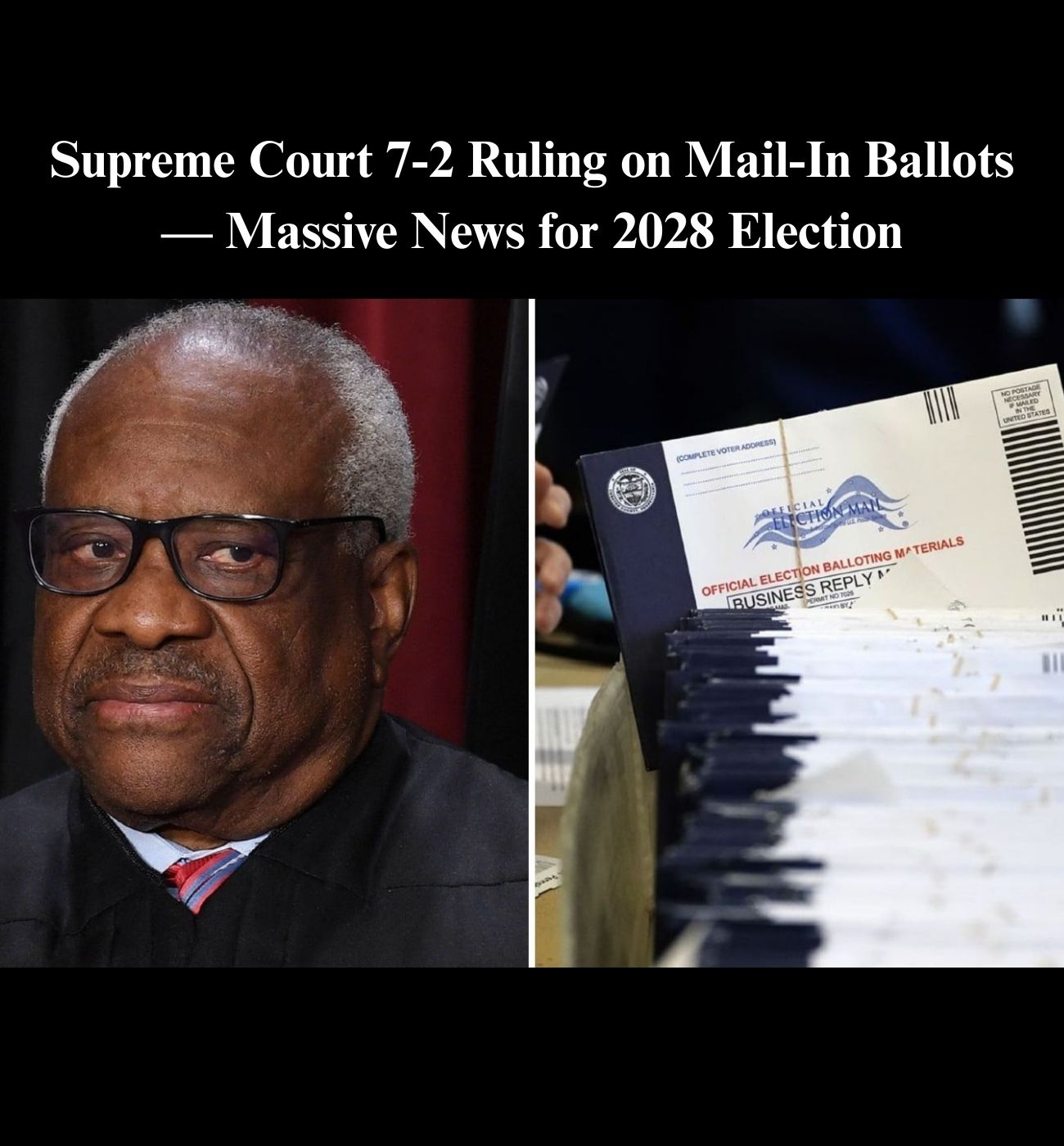
The U.S. Supreme Court last week revived a Republican lawmaker’s challenge to an Illinois absentee ballot law, ruling that he has legal standing to pursue his case. In a 7–2 decision, the court held that Rep. Michael Bost (R-Ill.) can challenge a state law that allows mail-in ballots postmarked by Election Day to be received and counted for up to two weeks afterward.
Chief Justice John Roberts wrote the majority opinion. Roberts wrote that candidates have a “concrete and particularized” interest in the rules governing vote counting in their elections, even if those rules do not directly affect their chances of winning or increase campaign costs.
“Candidates have a concrete and particularized interest in the rules that govern the counting of votes in their elections, regardless whether those rules harm their electoral prospects or increase the cost of their campaigns,” Roberts noted in the ruling. “Their interest extends to the integrity of the election—and the democratic process by which they earn or lose the support of the people they seek to represent.”
Bost filed the lawsuit in 2022, arguing that the Illinois law conflicts with federal statutes that set a uniform Election Day for federal offices. Lower courts had dismissed the case, concluding he lacked the legal right, or “standing,” to bring the challenge.
Two liberal justices dissented, warning that the decision could lead to increased litigation over election laws, CNN reported.
Legal experts say the ruling could encourage similar challenges to voting rules in other states, especially as litigation over election procedures continues.
Illinois officials had argued that allowing the lawsuit to proceed could burden election administrators and disrupt the implementation of established voting practices.
Bost did not allege fraud in his filings, and former President Donald Trump has previously criticized mail-in voting and late ballot counting, though the Illinois law dates back to 2005.
“Today’s ruling could open the door to a lot of litigation—and potential chaos – on the far side of the next contested election,” said Steve Vladeck, CNN Supreme Court analyst and professor at Georgetown University Law Center.
“If candidates will generally have standing to challenge how votes are counted in any election they’re running in, that could dramatically expand the horizon of legal challenges that can be brought challenging even those elections that were completely by the book,” Vladeck said, “potentially injecting more uncertainty in those critical days and weeks after Election Day going forward.”
Susan Shelley, the president of the nonpartisan civic organization Valley VOTE in the San Fernando Valley, wrote an op-ed in The Hill arguing that this Supreme Court ruling could change elections in America forever.
“Federal law (2 U.S. Code Section 7) states that there is one ‘day for the election.’ That law may preempt dozens of state laws that say ballots cast on election day must be accepted days or weeks later. The question is, who has the right to sue over it?” Shelley wrote in her column.
She added:
Now we know: any candidate for federal office. On Wednesday, the U.S. Supreme Court held that candidates have “standing” to file a legal challenge to “the rules that govern the counting of votes in their elections, regardless whether those rules harm their electoral prospects or increase the cost of their campaigns.” Chief Justice John Roberts wrote, “Their interest extends to the integrity of the election — and the democratic process by which they earn or lose the support of the people they seek to represent.”
Did the Supreme Court just tell us that late-arriving mail ballots are a threat to election integrity? This could get interesting in a hurry.
The decision broke new ground. Previously, the courts treated candidates like everybody else, holding that none of us have “standing” to challenge election rules because they affect all of us in the same way.
“A ban on counting late-arriving ballots in elections for a federal office would affect nearly all elections, because all 435 seats in Congress are on the ballot every two years. Removing election integrity risks in federal races would also clean up state and local races on the same ballots,” she wrote.