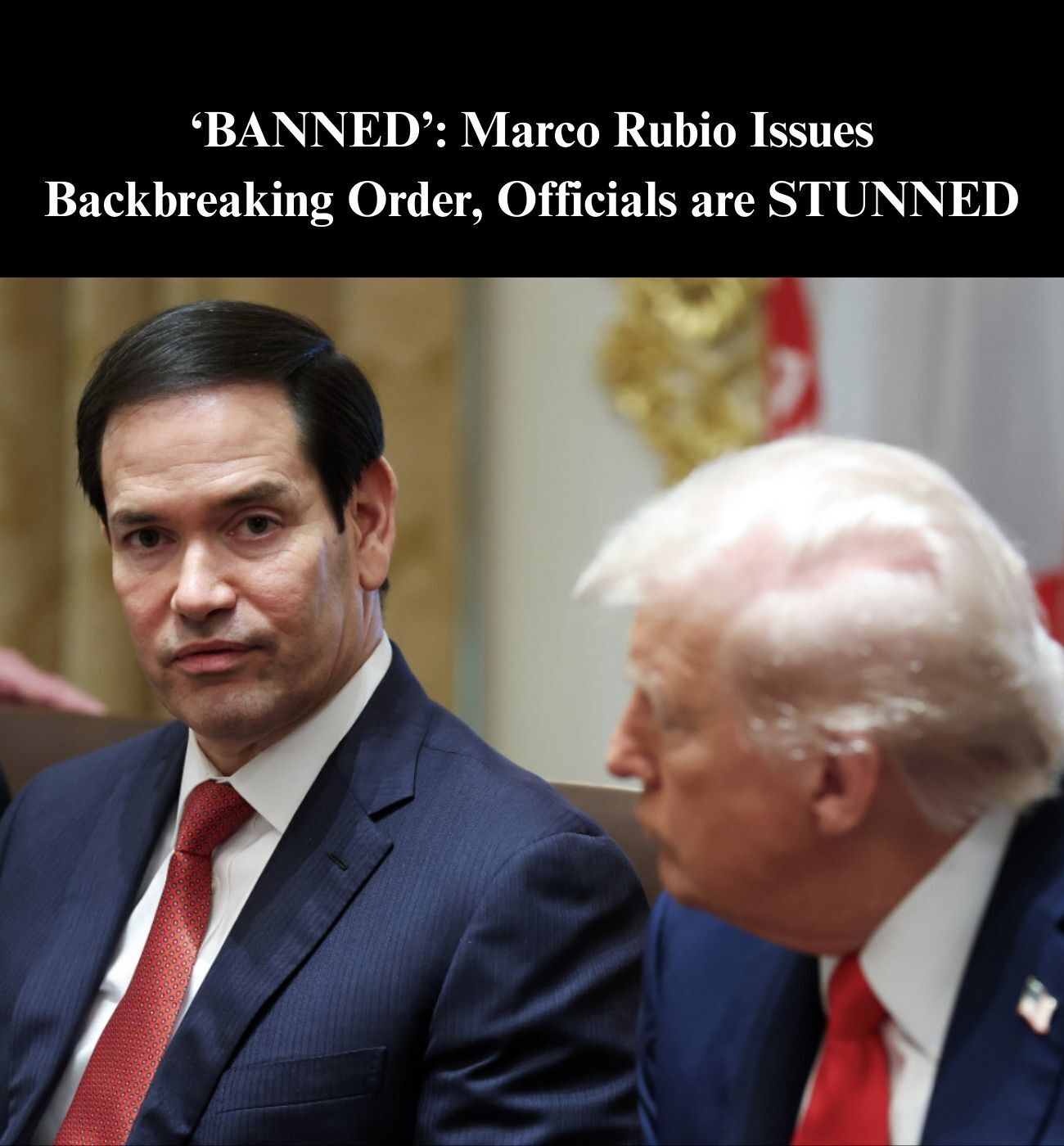
The State Department announced that it has barred five prominent European officials and activists from entering the United States, accusing them of leading coordinated efforts to pressure American tech companies to censor U.S. citizens’ speech online.
Secretary of State Marco Rubio said the move marks the first enforcement action under a new visa policy, unveiled in May, designed to block foreign nationals who “directly advance or facilitate censorship of protected speech within the United States.”
“For far too long, ideologues in Europe have led organized efforts to coerce American platforms to punish American viewpoints they oppose,” Rubio said in a post on X. “The Trump Administration will no longer tolerate these egregious acts of extraterritorial censorship.”
The five individuals named in the action are Imran Ahmed, CEO of the UK-based Centre for Countering Digital Hate (CCDH); Josephine Ballon and Anna-Lena von Hodenberg, co-CEOs of the German organization HateAid; Clare Melford, executive director of the Global Disinformation Index (GDI); and Thierry Breton, a former European Union commissioner who oversaw the implementation of the EU’s Digital Services Act (DSA).
According to Under Secretary of State for Public Diplomacy Sarah Rogers, who identified the banned individuals in a post Tuesday, the group was responsible for advancing “foreign government censorship campaigns against American citizens and U.S. companies.”
“These foreign operatives have sought to manipulate global tech platforms into suppressing American speech — including political speech — under the guise of combating ‘hate’ or ‘disinformation,’” Rogers wrote.
Rogers described Breton, a French business executive and former finance minister, as the “mastermind” of the EU’s Digital Services Act, a law requiring major online platforms to monitor and remove content deemed harmful or illegal in Europe.
That law, she said, had been “weaponized” to exert pressure on American companies such as X (formerly Twitter) and Meta to deplatform or downrank content involving political dissent and conservative viewpoints.
Breton became a central figure in the dispute between the EU and American social media platforms last year after warning billionaire Elon Musk that his platform could face penalties under the DSA for broadcasting a live interview with Donald Trump during his 2024 presidential campaign.
Responding to the ban, Breton wrote on X, “To our American friends: ‘Censorship isn’t where you think it is.’” He noted that all 27 EU member states had voted to adopt the DSA in 2022, arguing it was designed “to ensure that what is illegal offline is also illegal online.”
French Foreign Minister Jean-Noël Barrot condemned the visa restrictions, calling them “an unacceptable act of political retaliation.” He said France “strongly condemns this decision” and insisted that the DSA “has absolutely no extraterritorial reach and in no way concerns the United States.”
In a joint statement, Ballon and von Hodenberg of HateAid accused the Trump administration of “repression” and claimed the ban was intended to “silence critics by any means necessary.”
The Global Disinformation Index and the Centre for Countering Digital Hate have previously faced criticism in the U.S. for their partnerships with American tech platforms and advertisers to flag or demonetize conservative-leaning media outlets.
In 2023, the House Judiciary Committee launched an investigation into both organizations for colluding with federal agencies to suppress online content.
Officials said the visa bans were enacted under Section 212(a)(3)(C) of the Immigration and Nationality Act, which allows the president to deny entry to individuals whose presence could have “potentially serious adverse foreign policy consequences” for the United States.
The visa bans are the latest step in the Trump administration’s campaign to combat foreign interference in U.S. speech, part of a broader initiative to separate American free expression from what it calls “foreign information control regimes.”
“This administration will use every lawful tool to protect Americans’ constitutional rights,” Rubio said. “Foreign activists who target U.S. citizens’ speech at the direction of their governments or through proxy groups will no longer be welcome in our country.”
The European Union issued a formal protest late Tuesday, warning that the restrictions could invite reciprocal measures.