The message was clear, the voices were loud, and the moment couldn’t be ignored.
At this year’s WNBA All-Star Game, the fight for fair pay took center stage — not just in negotiations, but on the court, in the stands, and across social media. Players took the floor in bold black T-shirts reading “Pay Us What You Owe Us”, a direct message to the league amid stalled Collective Bargaining Agreement (CBA) talks. From tipoff to final buzzer, the crowd chanted:
“Pay them! Pay them!”
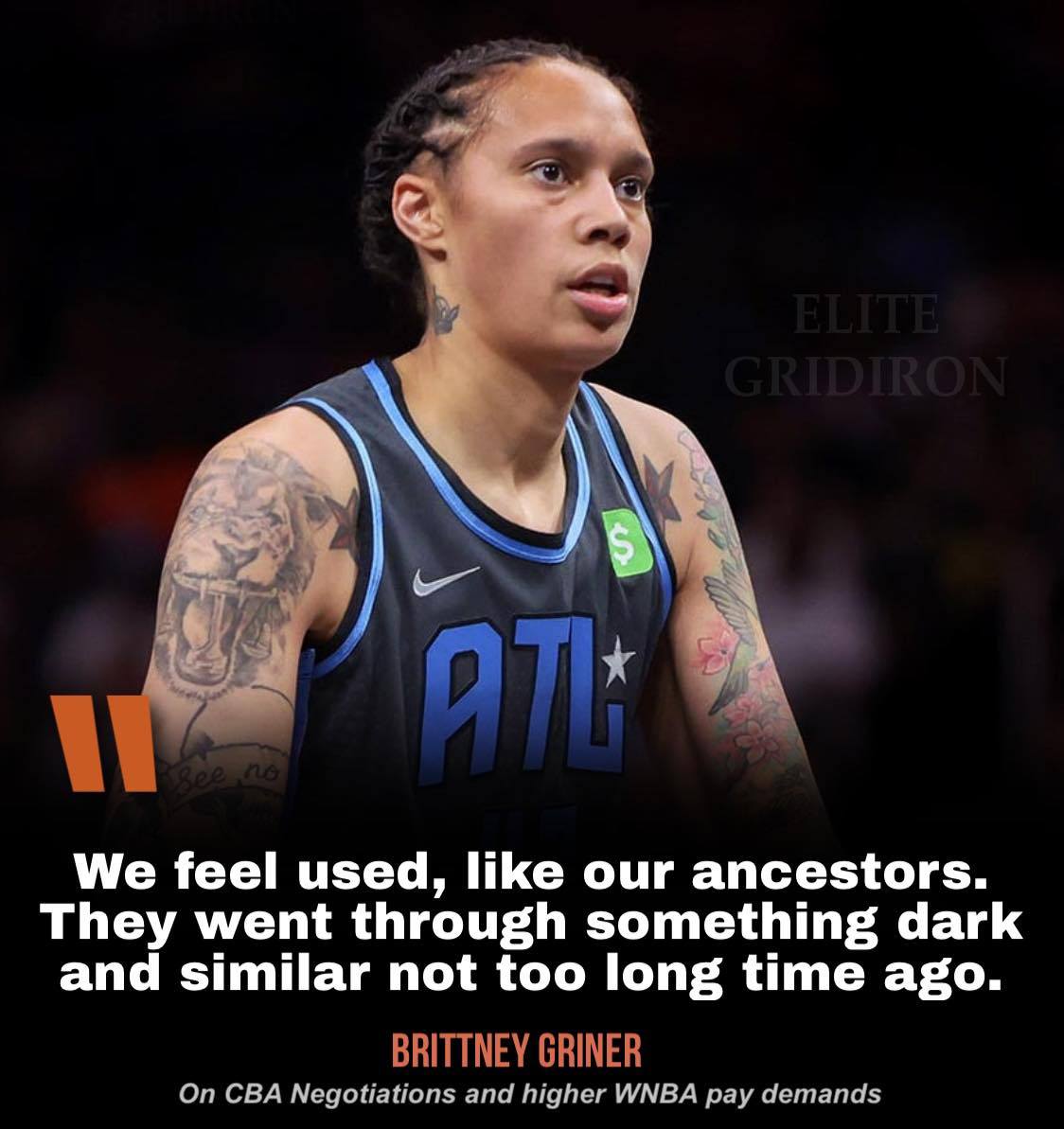
And now, one of the league’s most respected voices — Brittney Griner — has added powerful fuel to the fire.
“We’re not gonna let them take advantage of our talents to be used for a money grab. We’re not gonna be repeating history.”
— Brittney Griner
With those words, Griner didn’t just join the fight — she linked it to a generational struggle, calling out the long-standing exploitation of women athletes, especially Black women, in professional sports.
A Movement Decades in the Making
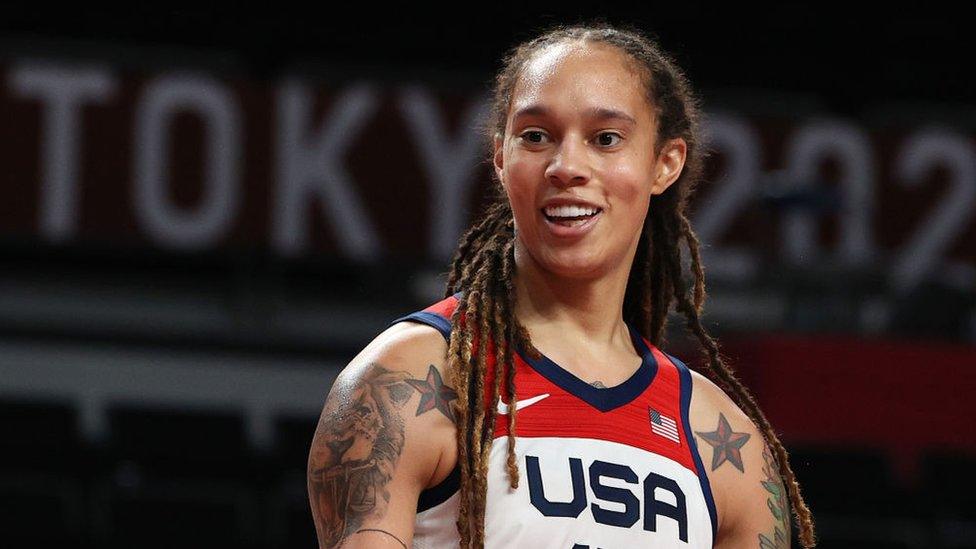
Griner’s statement hit harder than most. She wasn’t just speaking for her teammates — she was speaking for history.
For decades, female athletes have fought to be treated as equals: in pay, in media coverage, in basic professional standards like travel, training facilities, and health care. The WNBA, now over 25 years old, has made strides in visibility and talent — but players are still earning pennies compared to their male counterparts.
According to reports, the average WNBA salary remains under $150,000, with rookies making far less — while even mid-tier NBA players earn millions. Meanwhile, the WNBA continues to grow in popularity, with TV ratings rising, merchandise flying off shelves, and stars like Angel Reese, Caitlin Clark, A’ja Wilson, and Griner herself becoming household names.
So why hasn’t the pay caught up?
That’s exactly what Griner is asking — and she’s not alone.
The CBA Showdown
The WNBA’s current CBA is set to expire after this season, and the negotiations have reached a boiling point. Players are demanding a 50/50 revenue split, seven-figure salaries, and mandatory charter flights — arguing that they are the product, the brand, and the labor force keeping the league alive.
Yet critics point to the league’s financial structure. The WNBA is reportedly $400 million in debt, raising questions about where the money to fund such demands would come from.
But for players like Griner, that argument doesn’t hold up.
“The league is happy to market us, to use our likeness, to build their brand off our backs,” one anonymous player said. “But when it’s time to share the profits — suddenly, there’s no money?”
Griner’s Words Hit Different

Brittney Griner is no stranger to pressure. After spending nearly a year detained in Russia, her return to the WNBA was more than symbolic — it was a reminder of what many female athletes risk to make a living.
She’s now using her voice to fight for dignity, fairness, and legacy.
Griner’s reference to not “repeating history” echoed the struggles of trailblazing Black women in sports who were celebrated for their skills but never fairly compensated — from Althea Gibson to Wilma Rudolph to countless WNBA pioneers.
A Tipping Point?
The All-Star Game may have been a celebration, but its real legacy could be political. The visual of every All-Star warming up in “Pay Us What You Owe Us” shirts, combined with the crowd’s organic chanting, sent a clear signal:
This is more than a game.
The players are united, the fans are engaged, and the league is now on the clock.
As Griner put it, this isn’t just about money — it’s about refusing to be used without proper respect, investment, and compensation.
And this time, they’re not asking nicely.