WASHINGTON D.C. — In a blockbuster decision that will send shockwaves through the military and legal communities, the U.S. Supreme Court has handed a massive defeat to American veterans fighting the Department of Veterans Affairs (VA) for their rightful disability benefits.
In a 7-2 ruling in the case of Bufkin v. Collins, the Court decided that the U.S. Court of Appeals for Veterans Claims does not need to heavily scrutinize how the VA applies the famous “benefit-of-the-doubt” rule, effectively giving the federal bureaucracy the ultimate upper hand in close cases.
THE “BENEFIT OF THE DOUBT” RULE EXPLAINED
Under federal law, the VA is required to use a highly pro-veteran standard: if the evidence for and against a veteran’s disability claim is in “approximate balance” (meaning it’s essentially a tie), the VA must give the benefit of the doubt to the veteran and approve the claim.
However, the question before the Supreme Court was about appeals. If a veteran believes the VA wrongly calculated that evidence, how strictly should the appeals court review it?
Writing for the 7-2 majority, Justice Clarence Thomas delivered the crushing blow. He ruled that determining if evidence is balanced is a “predominantly factual question.” Therefore, the appeals court only has to check the VA’s math for “clear error” rather than reviewing the entire legal argument from scratch.
“We hold that the Veterans Court must review the VA’s application of the rule the same way it would any other determination—by reviewing legal issues de novo and factual issues for clear error,” Thomas wrote.
If the VA’s mistake isn’t screamingly obvious, the denial stands.
THE VETERANS AT THE CENTER OF THE FIGHT
The ruling stems from the combined appeals of two veterans who felt the VA completely ignored their conflicting, closely balanced evidence.
| Veteran | Branch | The Claim | The VA’s Finding |
| Joshua Bufkin | Air Force | PTSD related to severe in-service marital stress and hardship. | Denied: VA doctors disagreed on the diagnosis and the service connection; ruled the evidence was not balanced. |
| Norman Thornton | Army | Gulf War vet seeking a higher than 50% rating for his PTSD. | Denied: VA ruled his evidence simply did not support a higher disability rating. |
Because of the Supreme Court’s ruling, the Veterans Court of Appeals is not required to dive deep into the weeds to ensure these men actually received the benefit of the doubt.
AN UNLIKELY ALLIANCE IN DISSENT
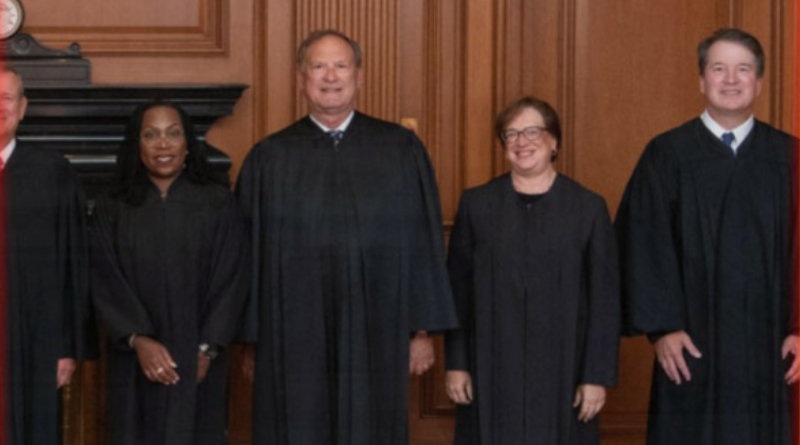
The ruling sparked a fierce and unusual alliance in dissent between the Court’s liberal and conservative wings. Justice Ketanji Brown Jackson, joined by conservative Justice Neil Gorsuch, absolutely torched the majority’s decision.
Jackson argued that Congress specifically created these rules to ensure veterans had any reasonable doubt resolved in their favor, and that the majority’s ruling renders those protections completely meaningless.
“The court today concludes that Congress meant nothing when it inserted [this language into law] in response to concerns that the Veterans Court was improperly rubberstamping the VA’s benefit-of-the-doubt determinations,” Jackson wrote. “I respectfully dissent.”
THE FALLOUT FOR VETERANS
While this is an incredibly frustrating outcome for those who served, the reality of the legal landscape has fundamentally shifted.
Veterans advocates are warning that this 7-2 decision strengthens the VA’s hand significantly. Because it limits the power of the appellate courts to overturn denials, veterans must now provide overwhelmingly strong medical and factual evidence before they even file a claim, because successfully challenging a VA denial in court just became exponentially harder.