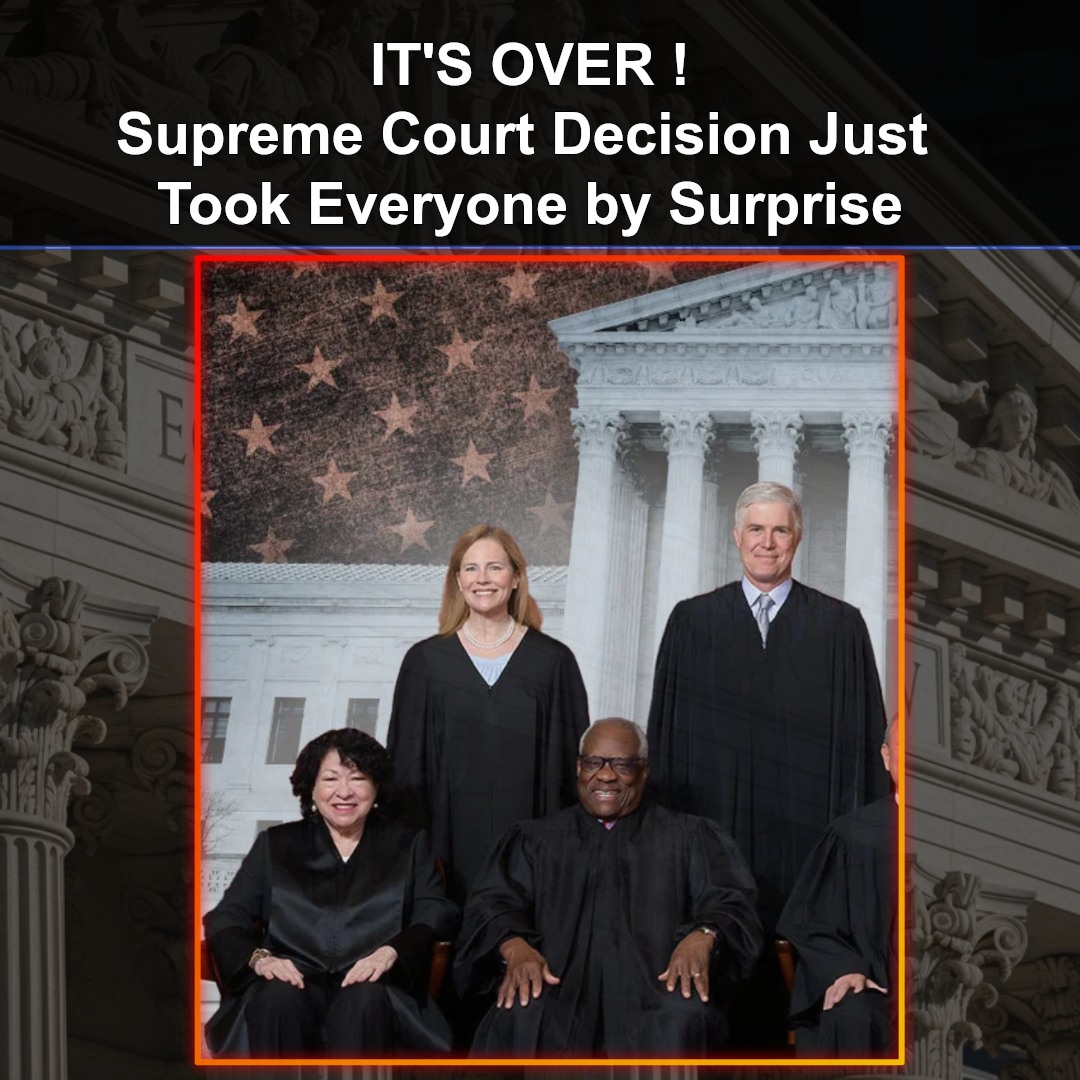
WASHINGTON D.C. — The Democrats’ worst nightmare is coming true. The Supreme Court appears poised to hand the Republican Party a permanent advantage in the House of Representatives, signaling it may gut Section 2 of the Voting Rights Act and allow the GOP to redraw up to 19 congressional districts in their favor.
The looming decision in Louisiana v. Callais has left the left “freaking out,” with voting rights groups warning that the ruling could essentially guarantee a Republican majority in 2026 and beyond.
“ROAD MAP” FOR TRUMP
During an appearance on Fox & Friends, attorney Mehek Cooke told host Kevin Corke that the Supreme Court is giving President Donald Trump a “road map” to navigate these complex cases.
“The Supreme Court appears to be tightening the reins on how federal courts enforce Section 2,” the report notes. This shift would shield state lawmakers from challenges that try to equate race with partisanship.
The Trump Justice Department, represented by Principal Deputy Solicitor General Hashim Mooppan, argued that states should be allowed to defend their maps by invoking “legitimate partisan aims”—even if those aims happen to overlap with racial demographics.
19 SEATS AT STAKE
The stakes couldn’t be higher. Two major voting rights groups—Fair Fight Action and the Black Voters Matter Fund—released a panicked analysis warning that eliminating or limiting Section 2 would be catastrophic for Democrats.
“Eliminating or limiting Section 2 would allow Republican-controlled legislatures to redraw up to 19 congressional districts in their favor,” the groups warned.
In total, they found 27 congressional seats across the country that could be redrawn to help Republicans, with 19 of those directly tied to the potential loss of Section 2 protections.
“SHALL MEANS SHALL”
The case centers on Louisiana’s 2022 congressional map, which a lower court claimed violated the Voting Rights Act by packing Black voters into a single district. But when the state drew a second majority-Black district, white voters sued, calling it an “unconstitutional racial gerrymander.”
Now, the Conservative majority on the Supreme Court seems ready to side with the argument that partisan goals are a valid defense.
Justices Brett Kavanaugh and Samuel Alito expressed deep skepticism about indefinite race-based remedies. Kavanaugh questioned if Section 2 needs a “sunset clause,” while Alito worried about judicial overreach in politically charged disputes.
If the Court rules as expected, the “road map” to a permanent GOP House majority will be complete—and for Democrats, it truly will be “OVER.”