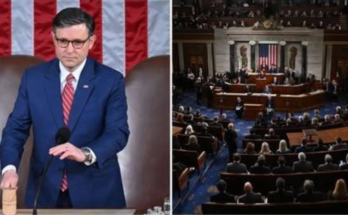
WASHINGTON D.C. — The race for global artificial intelligence supremacy is accelerating, and Congress is desperately trying to clear the runway. Following a chaotic conservative revolt that nearly killed the legislation on a procedural vote, the House of Representatives managed to pass the SPEED Act in a nail-biting 221 to 196 vote.
Backed by major tech titans like OpenAI, Microsoft, and Micron, the bill is designed to aggressively cut the bureaucratic red tape holding back the construction of power-hungry AI data centers and critical electric grid infrastructure.
GUTTING THE RED TAPE
Supporters of the SPEED Act argue that if the United States wants to crush global rivals like China in the AI race, the country simply cannot wait years for federal environmental approvals.
“The electricity we will need to power AI computing for civilian and military use is a national imperative,” declared Rep. Bruce Westerman (R-Ark.), the bill’s sponsor and chair of the House Natural Resources Committee.
To speed up construction, the legislation completely overhauls the 1969 National Environmental Policy Act (NEPA). The SPEED Act slashes the current six-year statute of limitations for NEPA litigation down to just 150 days and dramatically tightens the deadlines for federal environmental reviews.
Rep. Jared Golden (D-Maine), the bill’s Democratic cosponsor, argued the overhaul will finally allow the U.S. to be “nimble enough to build what we need, when we need it.”
THE DEMOCRAT BACKLASH
Despite some bipartisan agreement that the permitting process is broken, the vast majority of House Democrats fiercely opposed the final bill.
The resistance exploded after GOP leadership inserted highly controversial language into the SPEED Act designed to protect President Donald Trump’s efforts to block offshore wind and other renewable energy sources. During the procedural chaos, conservatives demanded these exact concessions in exchange for their critical votes, severely limiting the White House’s ability to yank permits for projects it dislikes.
“That provision codifies a broken permitting status quo,” argued Rep. Scott Peters (D-Calif.), a proponent of general permitting reform who ultimately voted against the SPEED Act due to the GOP amendments.
THE “U.S. TECH FORCE” LAUNCHES
While the House battles over physical infrastructure, the Trump administration is simultaneously moving to completely overhaul the government’s human infrastructure.
This month, the administration officially unveiled the “U.S. Tech Force,” an elite initiative designed to hire roughly 1,000 engineers and top-tier experts for two-year stints. These recruits will report directly to agency leaders to accelerate AI adoption and modernize technology projects across the federal government.
The initiative features an absolute powerhouse list of private sector partners, including:
-
Amazon Web Services
-
Apple
-
Google
-
Nvidia
-
OpenAI
-
Palantir
After completing their two terms, Tech Force members are eligible to apply for full-time positions with the tech companies that have agreed to hire program alumni.
U.S. Office of Personnel Management (OPM) Director Scott Kupor recently defended the massive hiring push on CNBC’s Squawk Box, stating, “We’re trying to reshape the workforce to make sure we have the right talent on the right problems.”
Between the passage of the SPEED Act and the deployment of the Tech Force, Washington is making it crystal clear: the AI revolution is here, and they are preparing to build it at any cost.