Some news stories function as an IQ test. This one certainly does.
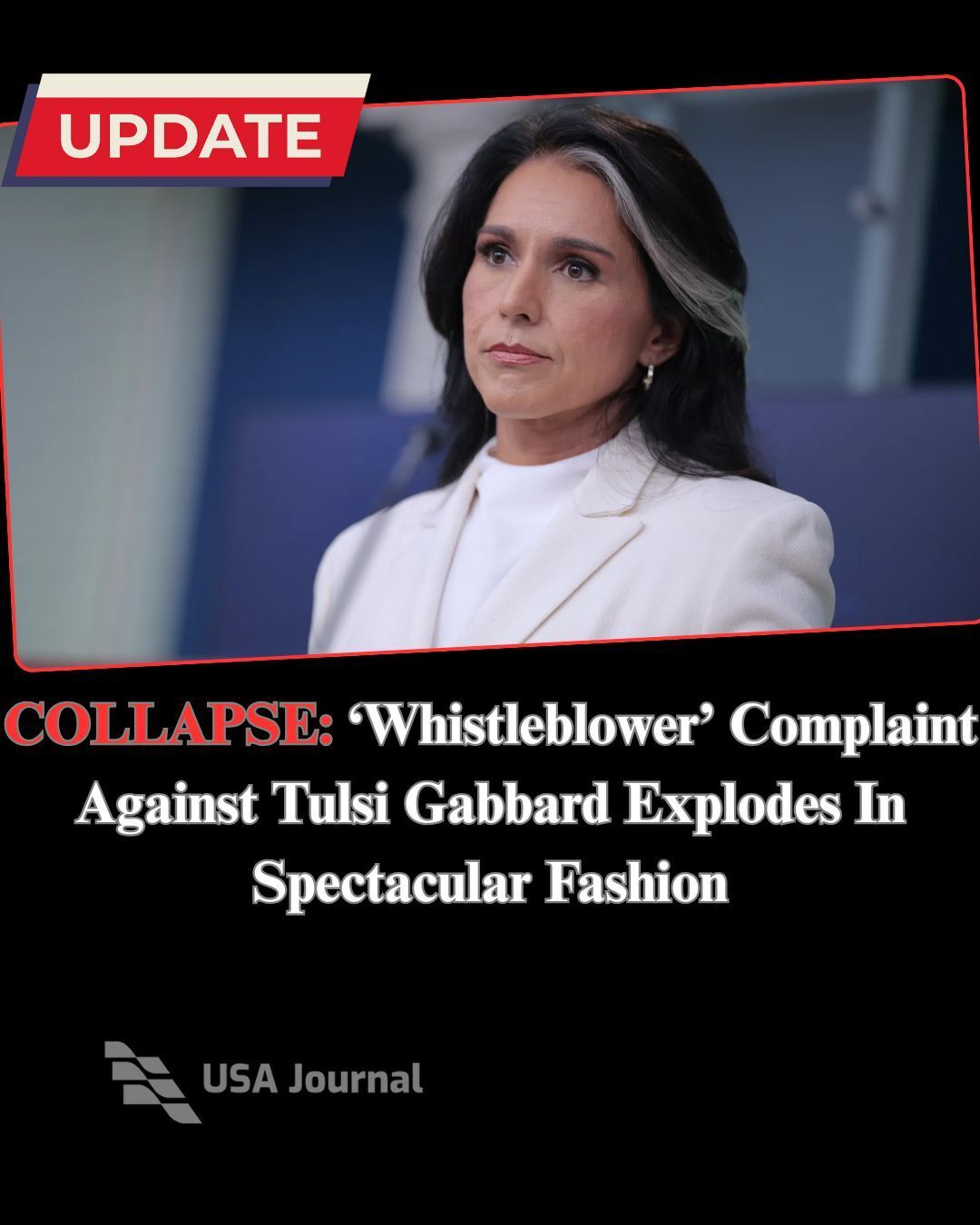
My first reaction to a recent report claiming Tulsi Gabbard was “covering up” a supposedly explosive whistleblower complaint involving foreign intelligence and the Trump White House was disbelief — followed quickly by confirmation. As usual, the Left and its allies in the mainstream press face-planted the test.
The allegation, pushed aggressively by The Guardian, was treated as fact almost instantly. Here’s the way it was reported before the outlet edited it for “clarity”:
Last spring, the National Security Agency (NSA) flagged an unusual phone call between an individual associated with foreign intelligence and a person close to Donald Trump, according to a whistleblower’s attorney who was briefed on details of the call.
Naturally, that claim sent the left-wing media into full hysteria. A “foreign intelligence asset” had a phone call with someone connected to Donald Trump? Cue the breathless headlines. Russian collusion 2.0 had arrived — at least in their imaginations — and with it, the familiar thrill of potential impeachment bait.
Enjoying our conservative news and commentary? Sharing and telling your friends about us helps us grow!
But even before the story was quietly amended, it was riddled with holes big enough to drive a truck through. Start with the most obvious: what foreign intelligence service? The report never said. And that omission wasn’t accidental. A British intelligence official speaking with the White House wouldn’t raise an eyebrow. A NATO ally wouldn’t either. The vagueness was the entire point.
By withholding basic facts, the so-called “whistleblower” complaint — and the Democrats eagerly pushing it — invited readers to assume the worst. Russia. China. Pick your favorite boogeyman. The narrative depended on implication, not evidence.
The second accusation was even weaker. The claim that Tulsi Gabbard sat on the complaint for nearly a year collapsed almost immediately. The DNI’s office responded by explaining that Gabbard had only seen the complaint two weeks earlier, because it had been held by a Biden-era inspector general, Tamara Johnson.
If this so-called “scandal” had ended there, it would already qualify as a complete dud. But of course, it didn’t stop — because the media’s incentive isn’t accuracy, it’s escalation.
What makes the episode even more damning is what happened next. Gabbard’s office explicitly warned The Guardian that they were being misled by the alleged “whistleblower” and that both the framing of the story and the headline were wrong:
Deputy Chief of Staff to DNI Gabbard Alexa Henning noted:
Your story is false. This headline is not accurate.
Your leaker lied to you. And you ignored our requests to give us time to get you accurate information and published your story before we could respond.
You are a total loser being used by your sources (likely Congress) to leak highly classified information.
Sure as shootin’, The Guardian has since published a “clarification” that isn’t really one at all. Instead, it’s an outright correction that completely demolishes their original ‘story.’
This story was amended on 7 February 2026 to clarify that the phone call was between two people associated with foreign intelligence who discussed someone close to Donald Trump, not between someone and a person close to Trump. The earlier version was based on multiple phone calls with a source who later said he misspoke and clarified the actual details of the call.
So we went from “flagged an unusual phone call between an individual associated with foreign intelligence and a person close to Donald Trump,” which was obviously meant to imply that someone in the White House was directly scheming with an adversary, to a phone call “between two people associated with foreign intelligence who discussed someone close to Donald Trump.”
After the correction, there isn’t even a husk of a newsworthy story left. Strip away the insinuation and drama, and what remains is this: people associated with foreign intelligence discussed the U.S. administration. Stop the presses.
Even if we generously accept the Guardian’s revised version as gospel — and there’s no real reason to extend that courtesy — the allegation collapses into banality. Governments talk to foreign governments. Intelligence officials interact. That’s not a scandal; it’s called diplomacy and national security.
This should be embarrassing for The Guardian. But that would require a functioning sense of shame — something increasingly absent not just there, but across much of the left-wing media ecosystem.