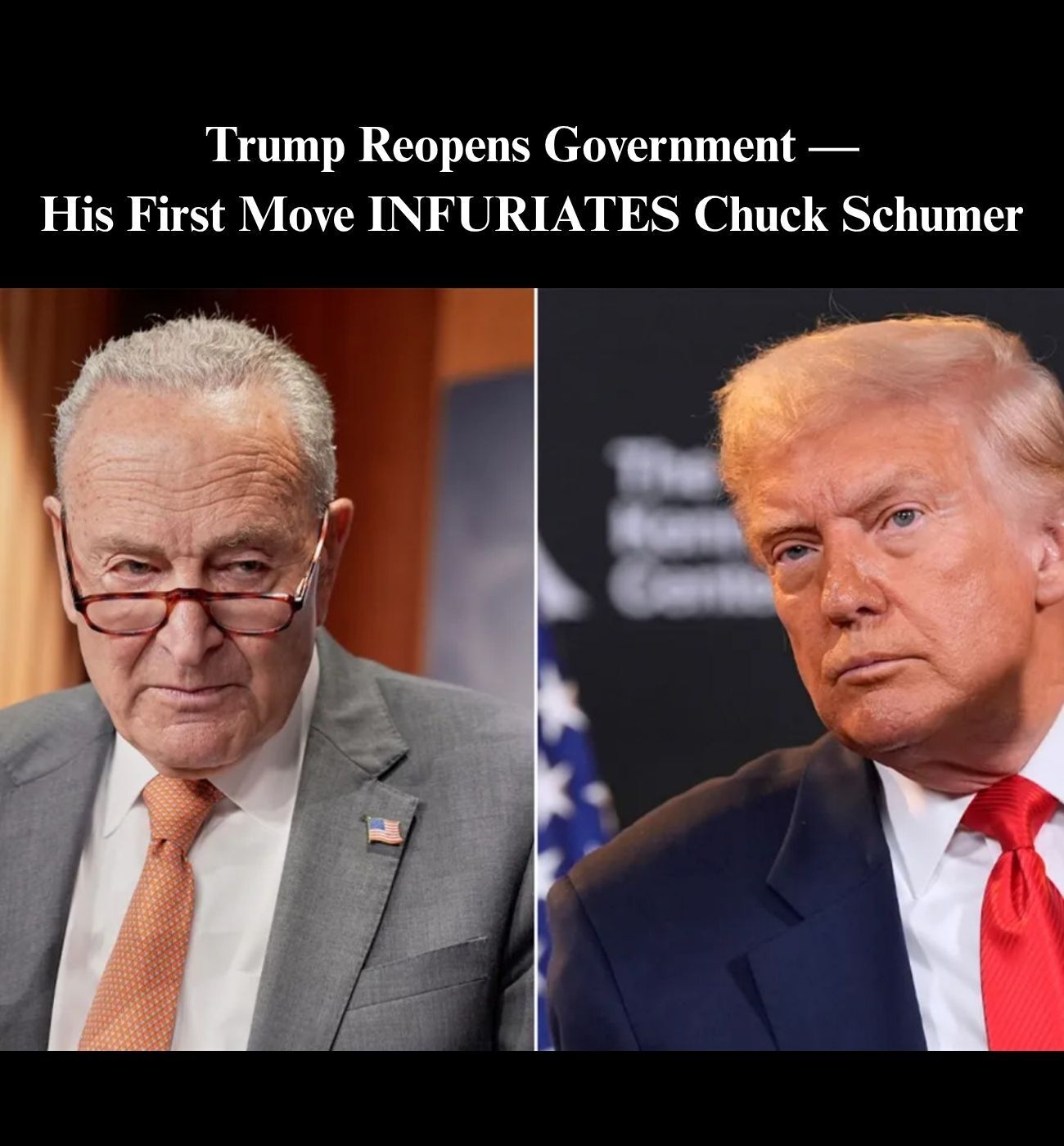
The longest government shutdown in U.S. history came to an end Wednesday night after President Donald Trump signed a bipartisan funding measure approved by both chambers of Congress, restoring full federal operations after 42 days of partial closure.
The House of Representatives passed the compromise bill in a 222–209 vote, following Senate approval earlier in the week. The agreement funds the federal government through January 2026, ending weeks of furloughs, missed paychecks, and halted public services that had strained agencies nationwide.
“The Democrat shutdown is finally over thanks to House and Senate Republicans,” GOP leaders said in a joint statement after the vote. “Democrats are responsible for millions of families going hungry and travelers stranded while our troops wondered if they’d be paid.”
Trump signed the measure shortly after the House vote, calling the standoff “an act of extortion” by Democrats.
“We’re sending a clear message that we will never give in to extortion,” Trump said from the White House. “That’s what it was — the Democrats tried to extort our country.”
Six Democrats — Adam Gray (CA), Tom Suozzi (NY), Marie Gluesenkamp Perez (WA), Don Davis (NC), Henry Cuellar (TX), and Jared Golden (MN) — broke with their party to vote for the bill. Two Republicans, Thomas Massie (KY) and Greg Steube (FL), opposed it.
The shutdown, which began Oct. 1, left nearly 700,000 federal workers furloughed and hundreds of thousands more — including military personnel, law enforcement, and airport screeners — working without pay. As Democrats remained the hurdle to passing a continuing resolution to fund the government, tens of millions also lost food stamp benefits under SNAP.
The agreement brokered by Senate Majority Leader John Thune (R-SD) and a small group of moderate Democrats will reverse federal layoffs ordered during the shutdown and restore normal government functions. However, it leaves unresolved a key Democratic demand: the extension of Affordable Care Act tax credits that expired in September and had lowered premiums for millions of Americans.
Democrats had made the ACA subsidies the centerpiece of their shutdown strategy, arguing that Republicans were holding health coverage hostage. House Minority Leader Hakeem Jeffries (D-N.Y.) vowed Wednesday that his party would continue the fight.
“This fight is not over. We’re just getting started,” Jeffries said on the House floor. “Either Republicans extend the Affordable Care Act tax credits this year, or the American people will throw Republicans out of their jobs next year.”
The shutdown’s political fallout has already reverberated through Washington. Following Republican losses in Virginia and New Jersey’s off-year elections, Trump acknowledged that the shutdown had been “a big factor” and intensified his push for abolishing the Senate filibuster, which he argued was preventing Republicans from acting decisively.
“If you don’t terminate the filibuster, you’ll be in bad shape,” Trump warned GOP senators earlier this week, saying Democrats “would immediately do it” if they were in power.
The new funding bill, approved after marathon negotiations, keeps current spending levels in place through January and includes a commitment to hold a Senate vote in December on whether to renew the ACA tax credits. It also reverses layoffs initiated by OMB Director Russell Vought, who had used the shutdown to downsize the federal workforce and halt infrastructure projects in states carried by Kamala Harris in 2024.
Democrats had initially refused to support any short-term funding bill that didn’t include the ACA extension, but cracks began to appear after the shutdown dragged into its sixth week. Eight Democratic-aligned senators ultimately voted with Republicans to end the standoff.
In the end, both sides claimed victory: Republicans for ending what they called a “Democrat-driven shutdown,” and Democrats for securing a promise of a floor vote on healthcare subsidies before year’s end.
Still, the reprieve may be temporary. The new law funds the government only through January 31, 2026, setting up another potential showdown early next year.
With election season already looming, both parties are preparing to use the shutdown’s outcome as ammunition for 2026. Democrats argue that Republicans endangered millions by cutting off food and healthcare programs, while Republicans maintain they stood firm against “reckless spending and political blackmail.”